Light, Tone, and Contrast
Looking at a painting is like entering a dark room with a flashlight. We don't see everything at once; instead, our eyes search for the brightest spots before moving toward the shadows. Artists use light, tone, and contrast to guide our steps along this visual path. Without these principles, a painting would be nothing more than a meaningless smudge of colors.
In this article, you will learn how light creates a hierarchy among figures and how contrast builds the drama of a painted story.
Visual Hierarchy: Who’s in Charge in the Painting?
Visual hierarchy is the order of importance an artist gives to the elements of a work. Imagine a theater stage: the director shines a spotlight on the lead actor while the others remain in the shadows. The same principle applies to painting.
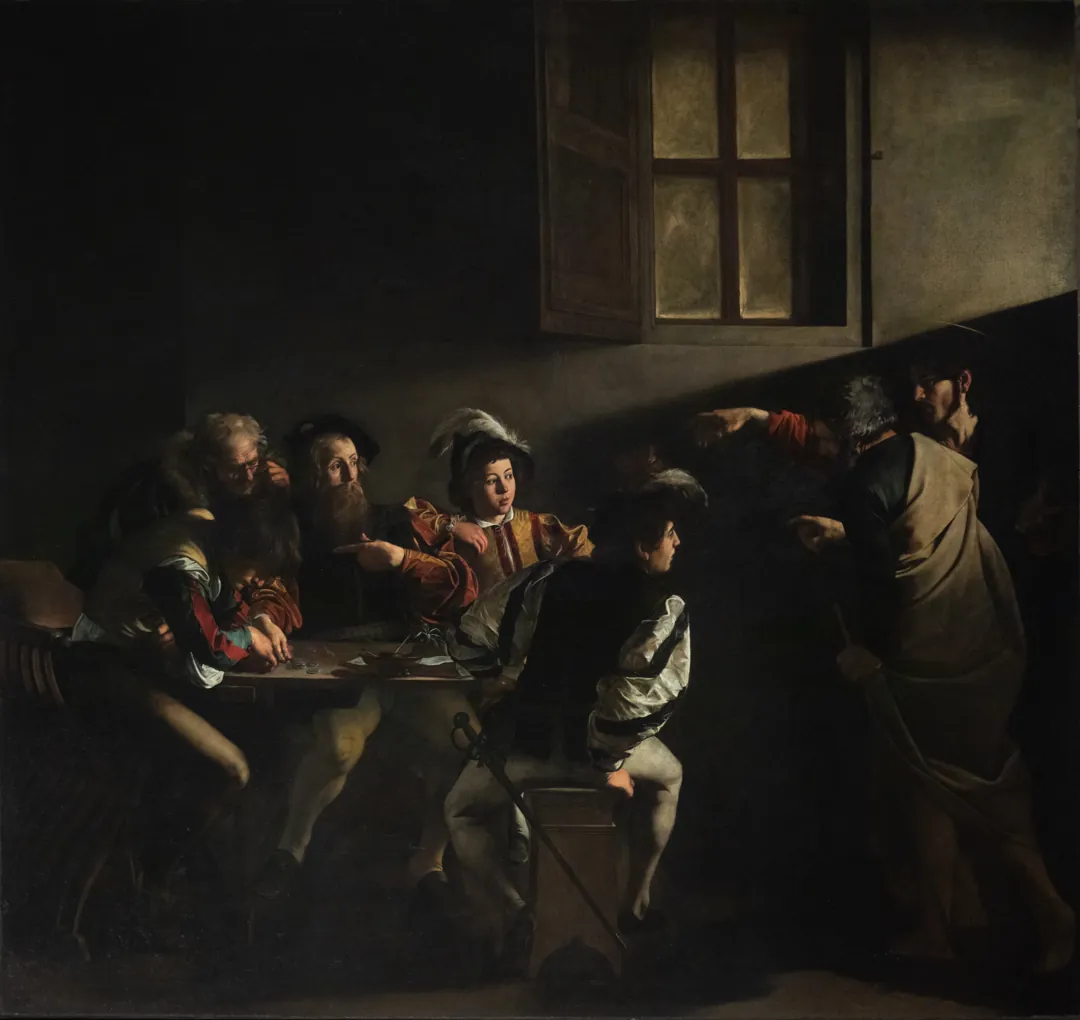
Tone is the degree of light or darkness a color possesses. If a character has a very light tone against a dark background, they become the absolute protagonist. Our eyes are naturally programmed to move toward the light.
A perfect example is Caravaggio's The Calling of St. Matthew. Here, a beam of light cuts through the darkness and points straight toward Matthew. You don't need to read a book to understand who the protagonist is; the light tells you.
Understanding hierarchy means understanding what the artist wants you to see first.
Contrast: The Spark of Drama
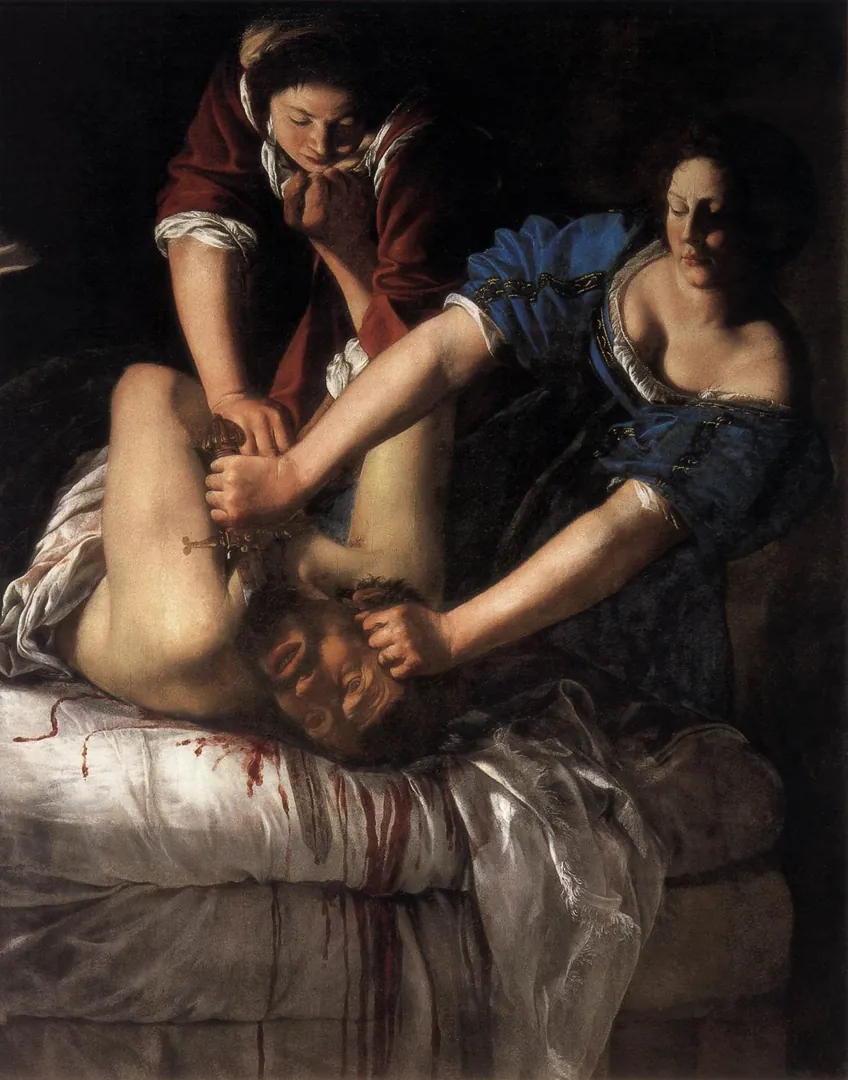
Contrast is the difference between the lightest and darkest areas. If the difference is minimal, the atmosphere feels calm and flat. If the difference is stark, drama is born. Contrast creates volume and depth, transforming a flat drawing into a solid body.
Think of contrast like the volume of music: low contrast is a whisper, while high contrast is a shout. Artists use dark tones to hide less important details and light tones to highlight muscles, expressions, or key gestures.
Take Artemisia Gentileschi's Judith Slaying Holofernes. The background is completely black. This void makes the women's pale skin and the red blood stand out. The violent contrast makes us feel the tension and effort of the moment.
Without contrast, the drama would lose its power and the scene would appear lifeless.
When Light Becomes Atmosphere
Light isn't always used to create conflict; sometimes it serves to unite everything we see. In these cases, the transitions between light and shadow are soft and blurred. There is no sharp line separating objects, but rather a veil that envelops them.
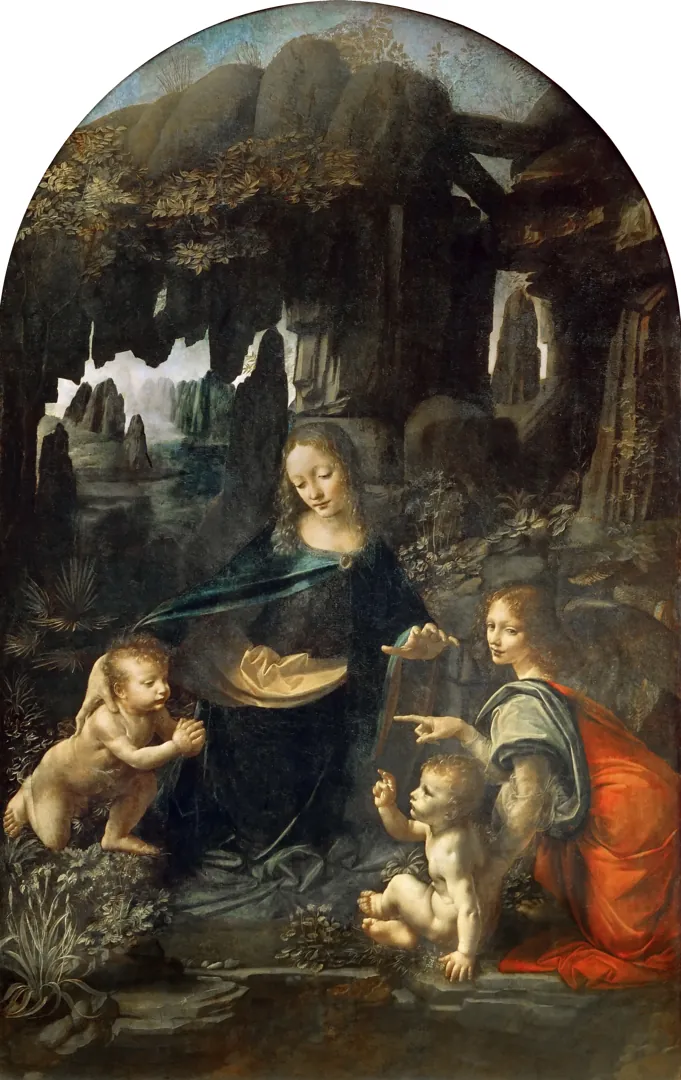
Leonardo da Vinci called this technique sfumato. Instead of using hard outlines, he allowed tones to transition into one another like smoke. This changes the way we perceive space, making everything feel more real and mysterious.
In the Virgin of the Rocks, the light doesn't strike the characters like a lightning bolt. Instead, it seems to filter from above, creating a damp, deep environment. Here, light isn't used to shout, but to create a silent bond between the figures and nature.
Changing the type of light changes the emotion the painting conveys.
What Happens if There Is No Contrast?
Many people think a painting without contrast is a mistake, but in reality, it is a deliberate choice. If an artist eliminates strong shadows, they are often trying to flatten the image to make it more like a symbol or a decoration.
Medieval painters, for example, often used gold backgrounds. Gold has no natural shadows and reflects light uniformly. This removes realism from the characters and makes them appear divine, existing outside of time.
Don't always look for volume. Sometimes the absence of contrast serves to transport you into a world that doesn't follow the laws of physics.
Put It Into Practice Now
You've read the method. Now, train your eye in the field.
Referenced Works
Put It Into Practice
You read the method. Now train your eye on real examples.
Try the Art Memory quiz